
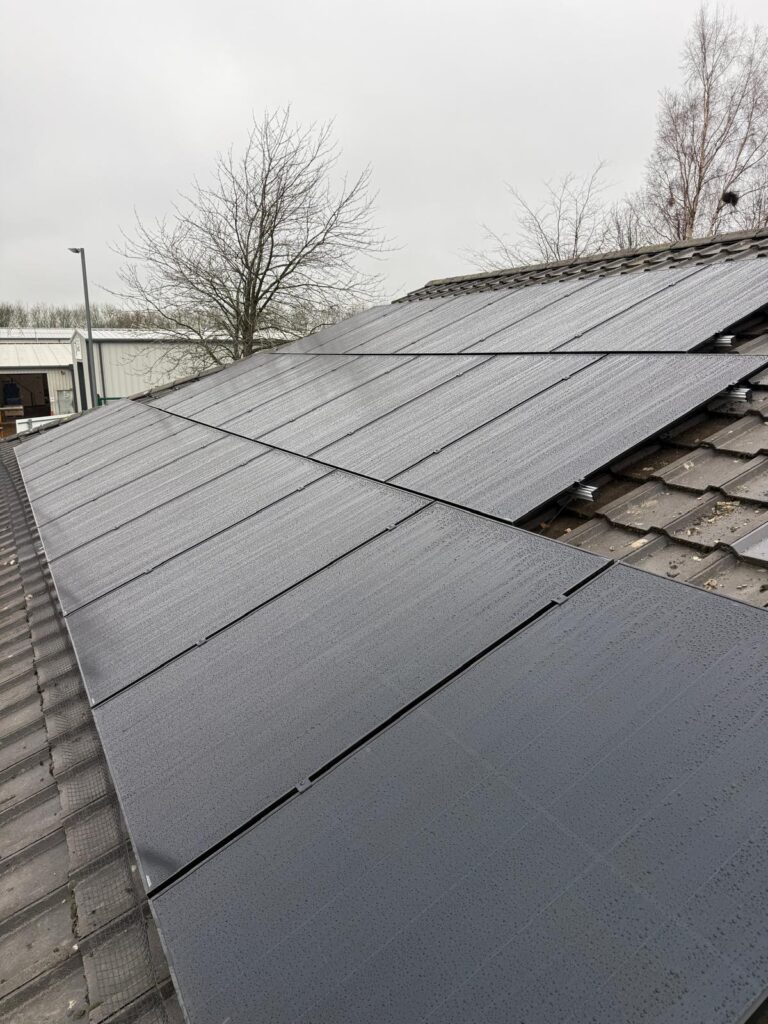
You’ve invested in solar panels, you’re generating your own electricity and reducing your reliance on the Grid, so, if there’s a power cut, you might reasonably assume your solar panels will keep the lights on. However, it’s not quite that straightforward!
With the winter months bringing the potential for high winds, storms and disruptions to the electricity network, it’s worth understanding exactly what your solar PV system can and can’t do during a power outage.
Most conventional Grid-connected solar PV systems are designed to shut down their electricity output when the mains electricity supply is interrupted, an important safety feature known as ‘anti-islanding protection’. Without it, electricity generated by solar panels could potentially feed back into the network while engineers are working to restore the electricity supply, putting them at risk. So, even on a beautifully sunny day, a conventional solar PV installation won’t necessarily provide your property with electricity during a power cut.
Surely having battery storage solves the problem?
Not automatically. Whilst a storage battery allows you to store electricity generated by your solar panels for later use, not all battery installations are configured to provide backup power, and there’s an important difference between having stored electricity available and having a system capable of safely supplying that electricity when the Grid is unavailable.
If protection against power outages is one of your reasons for investing in battery storage, it’s something that needs to be considered as part of the whole system design, and a backup gateway could be your answer.
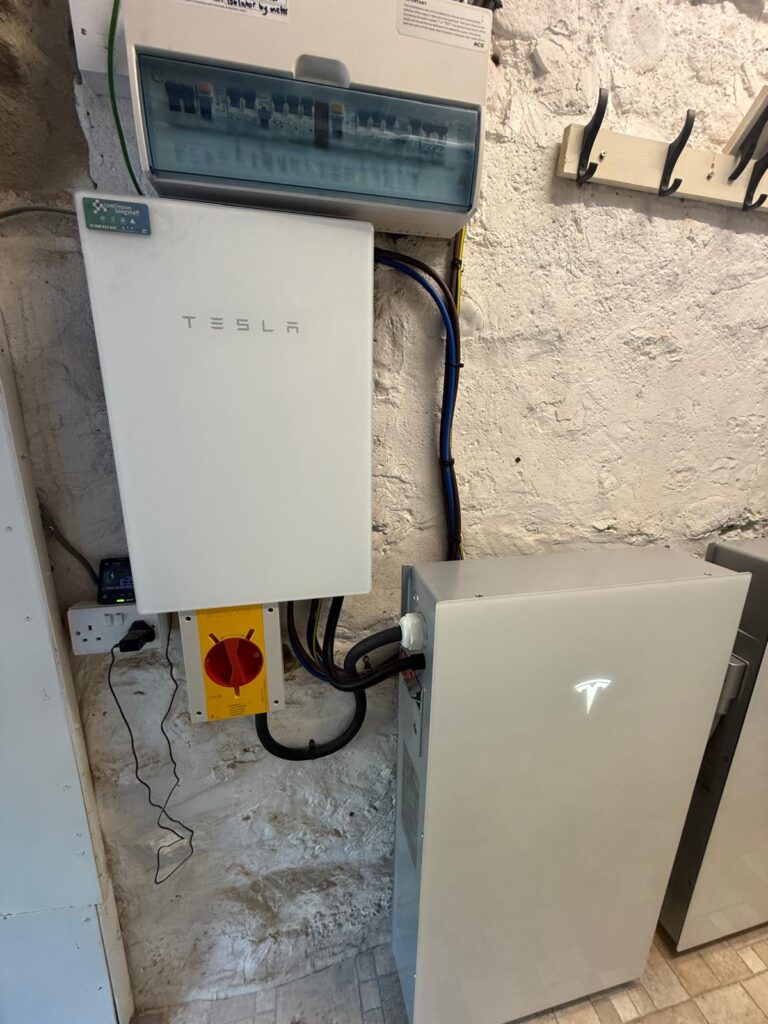
A backup gateway, such as the Tesla Backup Gateway, can work alongside compatible battery storage equipment to provide an alternative electricity supply during a power outage. The gateway detects the interruption to the mains electricity supply and safely isolates the relevant electrical installation from the Grid, thereby enabling the battery storage system to provide electricity to designated circuits or, where the system has been designed accordingly, the wider property.
Depending on the equipment and system configuration, solar panels may also continue to generate electricity and recharge the battery while the mains supply is unavailable. Once the Grid supply has been restored, the system can automatically return to normal operation.
So how much of my property can I keep running?
This depends on a number of factors, including battery storage capacity, available charge, inverter output, the electrical installation and how much electricity is being consumed. For some households, keeping the lights, fridge, internet connection and essential appliances running might be the priority; for businesses, the requirements could include maintaining IT equipment, communications, refrigeration or other essential electrical systems. Larger commercial and industrial facilities may have considerably more complex requirements, particularly where specialist machinery or three-phase equipment is involved.
An appropriately designed backup system can help reduce the impact of power outages, but it is important to understand its capabilities and limitations.
And what if I don’t have solar panels?
Interestingly, you don’t necessarily need solar panels to benefit from battery storage and backup power. Earlier this year, we installed a Tesla Powerwall, Expansion Pack and Backup Gateway at a residential property in County Durham where the roof was not suitable for solar PV. With an exotic fishpond requiring a dependable electricity supply, protection against power interruptions was an important consideration for the household, and so we designed a battery system that can charge from the Grid and provide backup electricity when required. This is just one case in proof that renewable and energy storage technologies can offer solutions beyond a conventional rooftop solar installation.
Whether you’re considering a new solar PV installation, already have solar panels or are exploring ways to make your home or business more resilient to power interruptions, understanding your requirements is the starting point. At Tomlinson Longstaff, we can assess your existing electrical infrastructure and energy requirements and advise on suitable solar PV, battery storage and backup power solutions, because generating your own electricity is one thing, but being able to use it when you really need it is another.
Find out more about our renewable technology services.
Tomlinson Longstaff Ltd is an electrical contractor based in Country Durham, north east England. We offer a wide range of electrical services including design, testing, installation and maintenance.