
At this time of year, many of us arrive at work in the dark and leave in the dark, with artificial lighting providing much of the illumination we need throughout the working day, and while upgrading to LED lighting is often driven by a desire to reduce electricity consumption and associated costs, how often do we stop to consider the other benefits of improving our workplace lighting?
From offices and educational environments to warehouses and manufacturing facilities, the quality of lighting can make a considerable difference to how a building functions and how people experience their working environment.
Let’s start with the obvious benefit…
LED lighting is generally considerably more energy efficient than older lighting technologies, such as traditional fluorescent and halogen installations. For businesses operating large premises, particularly those with extended working hours or round-the-clock operations, the cumulative electricity savings can be significant, however, the potential savings will depend on the existing lighting installation, the replacement equipment, the number of operating hours and how effectively the lighting is controlled.
Reducing electricity consumption can also help businesses work towards their environmental and carbon reduction objectives.
But could we also create a better working environment?
Have you ever worked somewhere where the lights flicker, there is too much glare on your computer screen, or certain areas always seem a little too dark? Lighting can have a significant impact on our comfort at work. A well-designed LED lighting installation can improve light distribution, colour rendering and visibility, while helping to reduce uncomfortable glare and flicker, ultimately reducing visual fatigue and supporting concentration, particularly in environments where employees are carrying out detailed or repetitive tasks.
But! Simply installing brighter lights isn’t necessarily the answer. The type of lighting, its positioning, colour temperature and intensity should all be considered in relation to the activities taking place within the space.
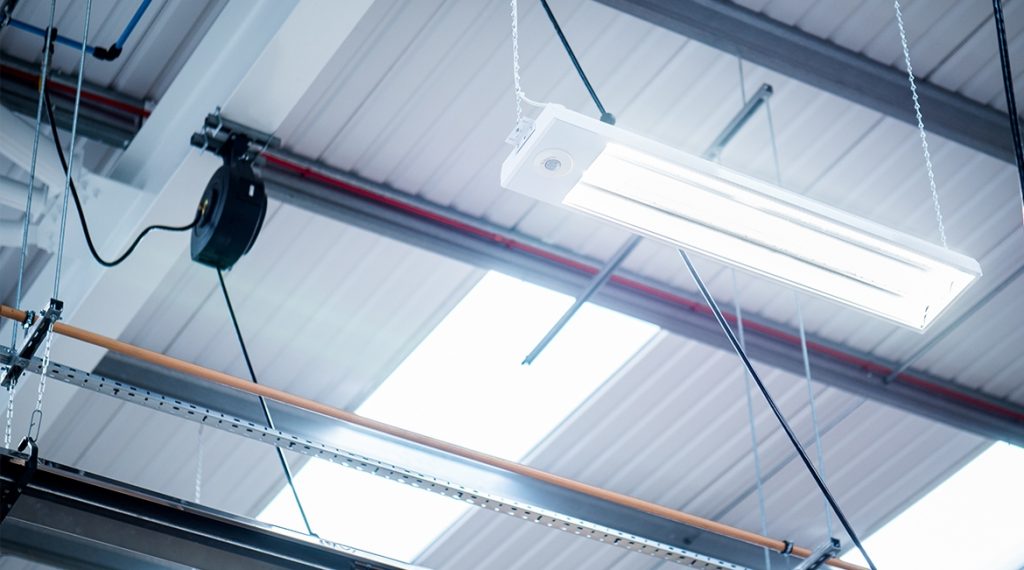
In industrial and manufacturing environments, appropriate lighting is particularly important. If we consider a busy warehouse where pedestrians and forklift trucks operate in close proximity, a manufacturing facility where employees work with machinery, or a workshop where precision and attention to detail are essential, poorly lit areas, excessive shadows and glare can make it more difficult to identify potential hazards and carry out tasks safely.
An appropriately designed lighting installation can help improve visibility across these environments, supporting wider workplace health and safety measures. And it doesn’t stop there; external areas, including car parks, loading bays and pedestrian routes, should also form part of any lighting assessment.
Less maintenance and less disruption
Another benefit of LED lighting that is often overlooked is its potential to reduce ongoing maintenance requirements. Quality LED fittings generally have a longer operational lifespan than many traditional lighting technologies, and so for a business operating from a large warehouse or manufacturing facility with high ceilings, replacing a failed light fitting may reduce the much more involved job in simply changing a bulb. In these instances, specialist access equipment may be required, work areas may need to be temporarily closed, and production or other activities could be disrupted, but by reducing the frequency of lighting replacements there can be benefits delivered beyond the cost of purely the replacement fittings themselves.
An upgrade to LED lighting also provides an opportunity to consider how lighting is controlled throughout your premises. Occupancy sensors can ensure lighting is only used when areas are occupied, whilst daylight sensors can adjust artificial lighting according to the natural light available, and separate lighting zones can also give businesses greater control over different areas of a building, rather than illuminating an entire facility when only certain sections are in use.
The key is ensuring that the right amount of light is available in the right place, at the right time.
So, is it time to review your workplace lighting?
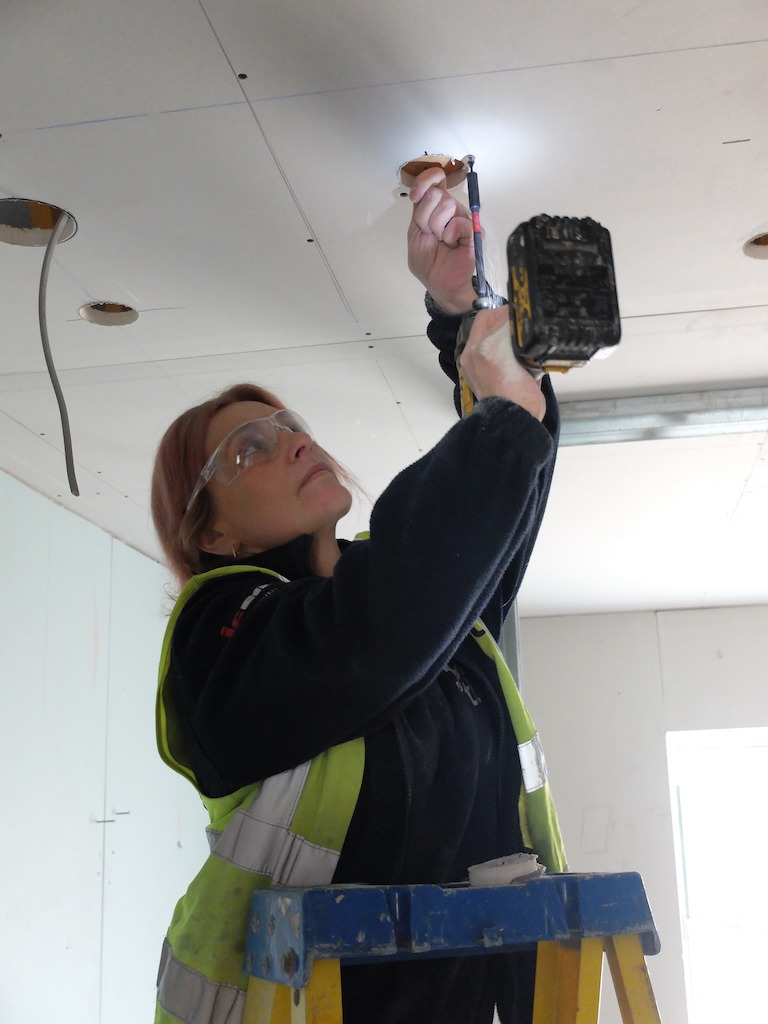
At Tomlinson Longstaff, we can assess your existing electrical and lighting installations and identify opportunities to improve their efficiency, suitability and performance, whether it’s upgrading an existing lighting system or designing an installation as part of a wider refurbishment or development project.
We take into consideration how the building is used and the requirements of the people working within it from the very start, because a successful LED lighting installation shouldn’t just look good on your electricity bill, it should make a positive difference to your working environment and happiness of your teams too.
Get in touch with the TL team to discuss your commercial or industrial lighting requirements.
Tomlinson Longstaff Ltd is an electrical contractor based in Country Durham, north east England. We offer a wide range of electrical services including design, testing, installation and maintenance.